Summer break is the highlight of the year for most children no early alarms, no homework, and long, lazy days to fill. But in Dubai, where temperatures regularly climb past 45°C, the season also brings its own health challenges. Between the intense heat, extra hours in front of screens, and disrupted routines, it takes a little planning to keep kids happy, active, and well through the holidays.
Here's a practical guide for parents on the three things that matter most over the summer hydration, screen time, and knowing when to see a doctor.
Children lose fluids faster than adults and often don't recognise thirst until they're already dehydrated. In Dubai's extreme summer, this is one of the most important things to stay on top of.
A few simple habits make a big difference:
Watch for the early signs of dehydration: a dry mouth, fewer trips to the bathroom, dark-coloured urine, tiredness, irritability, or dizziness. In infants, look for fewer wet nappies and crying without tears. Mild dehydration can usually be managed at home with fluids and rest but if symptoms are severe or your child can't keep fluids down, seek medical care promptly.
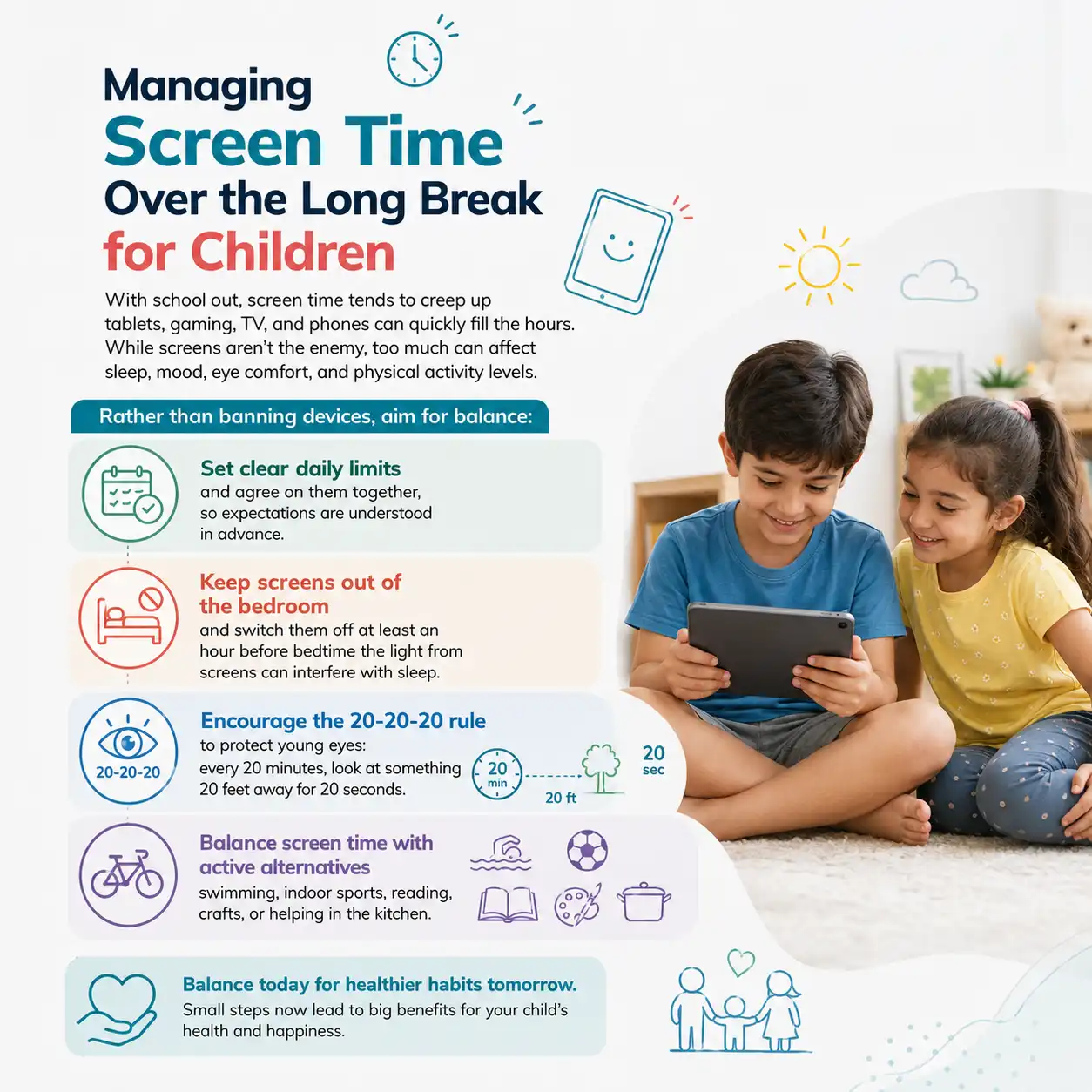
With school out, screen time tends to creep up tablets, gaming, TV, and phones can quickly fill the hours. While screens aren't the enemy, too much can affect sleep, mood, eye comfort, and physical activity levels.
Rather than banning devices, aim for balance:
If your child complains of frequent headaches, tired or dry eyes, or blurred vision after using screens, it may be worth booking an eye check to rule out any underlying issue.
Physical activity supports everything from sleep and concentration to healthy weight and mood. In the peak of a Dubai summer, much of this simply moves indoors.
Dubai offers plenty of options: indoor play areas, swimming pools, trampoline parks, and sports academies keep children moving without the heat. At home, family walks around the mall, dance sessions, or simple games all count. Aim for around an hour of activity a day, broken into shorter bursts if that's easier.
If your family enjoys the pool or beach in the cooler hours, keep sun safety in mind: apply a child-friendly SPF 30+ sunscreen, reapply after swimming, use hats and UV-protective clothing, and avoid the harshest midday sun.
A few conditions tend to appear more often over the Dubai summer. Knowing what to look for helps you act early:
Most summer sniffles and scrapes can be managed at home. But some symptoms need professional attention. Consider seeing a doctor if your child has:
Trust your instincts. As a parent, you know your child best if something doesn't feel right, it's always worth getting it checked.
A little preparation goes a long way toward a summer that's fun and healthy. And when your child needs expert care, our pediatric team at Fakeeh Medicentres is here to help from routine check-ups to advice on hydration, growth, and everyday childhood concerns.
Book a pediatric consultation today and give your family peace of mind all summer long.





%2040%2B.jpg)
.jpg)

.jpg)