As temperatures climb through the summer months, certain viral illnesses become more common among children — and enterovirus is one of the most frequent. Infection rates tend to rise during the summer and early autumn, largely because the virus spreads so easily among children in nurseries, schools, summer camps, clubs, and swimming pools.
The reassuring news is that most cases are mild and clear up on their own, and a few simple everyday habits can go a long way toward limiting the spread. Here, Dr. Enas Shamaa, Pediatrician at Fakeeh Medicentres in Dubai, explains what every parent should know.
Enterovirus isn't a single virus but a large family of more than 100 different types, including the Coxsackie and echoviruses. Infections can range from very mild symptoms to, in rare cases, more serious complications.
Because there are so many different strains, children can catch enterovirus more than once — one of the reasons it circulates so widely, particularly in the warmer months.
Children — especially those under the age of ten — are the most susceptible to enterovirus. As Dr. Shamaa explains, this is largely because they haven't yet developed immunity against the many different types of the virus. Combined with close contact in shared spaces like classrooms and pools, this makes children the group most likely to catch and pass on the infection.
Enterovirus is highly contagious and can spread in several ways:
The incubation period is usually between three and six days. Importantly, some children may be infected without showing any clear symptoms — yet can still pass the virus on to others.
The most common symptoms of enterovirus include:
These may also be accompanied by gastrointestinal symptoms such as vomiting, diarrhea, and abdominal pain.
Some types of enterovirus cause hand, foot, and mouth disease, which is characterised by blisters or sores inside the mouth and on the palms of the hands and the soles of the feet. These sores can make it difficult for a child to eat or drink — which, in turn, increases the risk of dehydration. Keeping your child comfortable and well hydrated is especially important if these symptoms appear.
The reassuring news is that most enterovirus infections improve on their own within 7 to 10 days. Treatment focuses on supporting your child's recovery through:
Dr. Shamaa stresses an important point: antibiotics do not treat enterovirus, because it is a viral illness. They are only used if a secondary bacterial infection is present, as determined by a doctor.
Dehydration is one of the most significant potential complications, particularly in younger children. Watch for these warning signs:
While uncommon, more serious complications can occur in rare cases, including viral meningitis, myocarditis (inflammation of the heart muscle), or encephalitis (inflammation of the brain).
Most children recover at home with rest and fluids. However, Dr. Shamaa urges parents to consult a doctor if their child experiences any of the following:
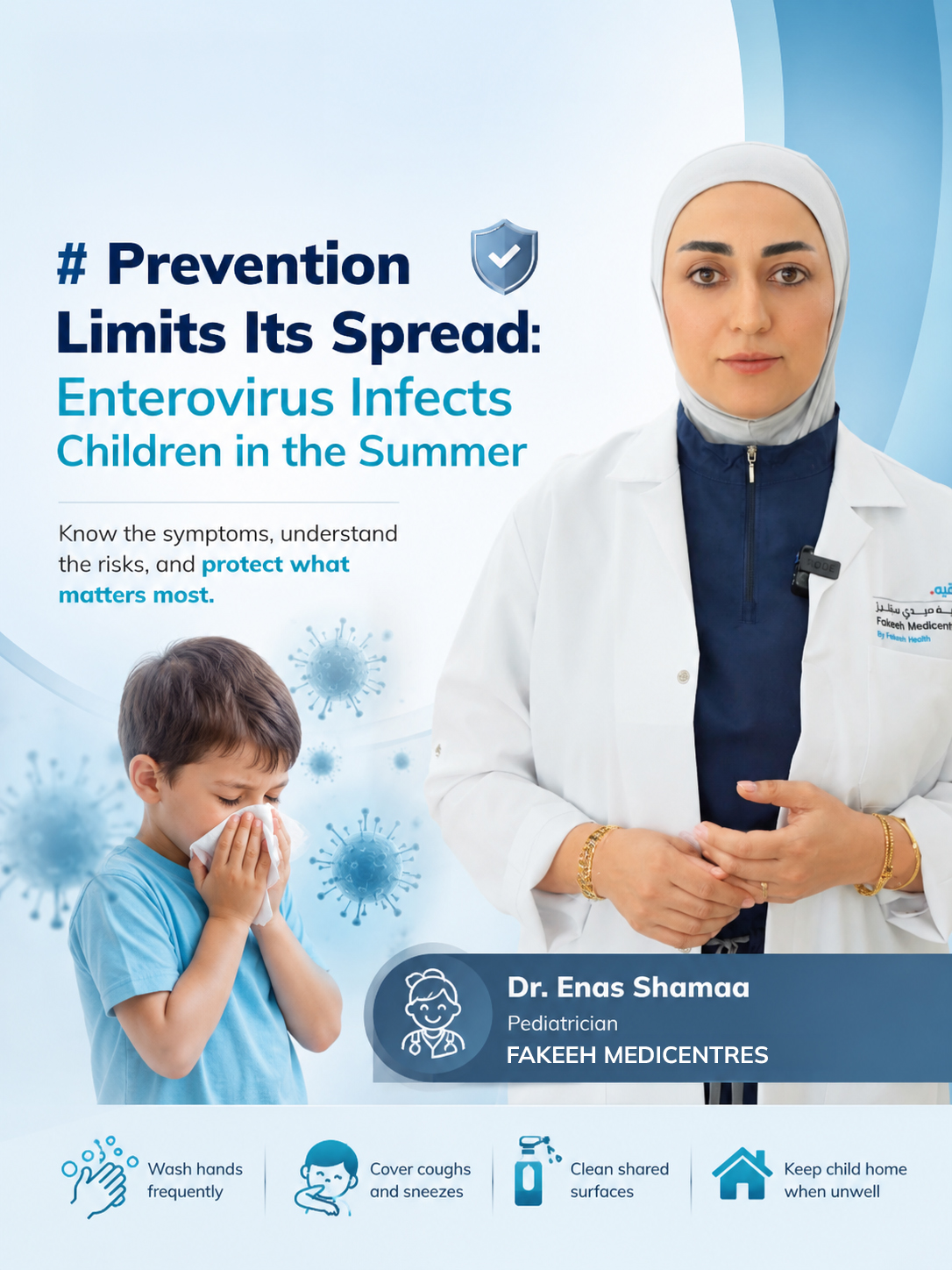
According to Dr. Shamaa, prevention remains the single most effective way to limit the spread of enterovirus. Simple habits make a real difference:
She also highlights the importance of choosing swimming pools that follow strict hygiene standards, and not allowing sick children to swim. Throughout any illness, ensuring adequate hydration and nutrition helps support recovery and reduce the risk of complications.
Summer illnesses are a normal part of childhood but you don't have to navigate them alone. If your child is showing symptoms of enterovirus, or you'd simply like the reassurance of expert advice, our pediatric team at Fakeeh Medicentres is here to help.





%2040%2B.jpg)
.jpg)
.jpg)
.jpg)